

MEDIA
Autonomous Mobile Robots (AMRs): The Future Backbone of Smart Factories in Indonesia
15 July 2025
A New Era for Indonesian Manufacturing
Indonesia's manufacturing sector is entering a new era — one defined by automation, connectivity, and data-driven operations. As industries push toward Industry 4.0, the need for smarter, more flexible logistics systems has never been greater. Traditional material handling methods that rely heavily on manual labor or fixed conveyor systems can no longer keep up with the speed, complexity, and precision required in modern production environments.
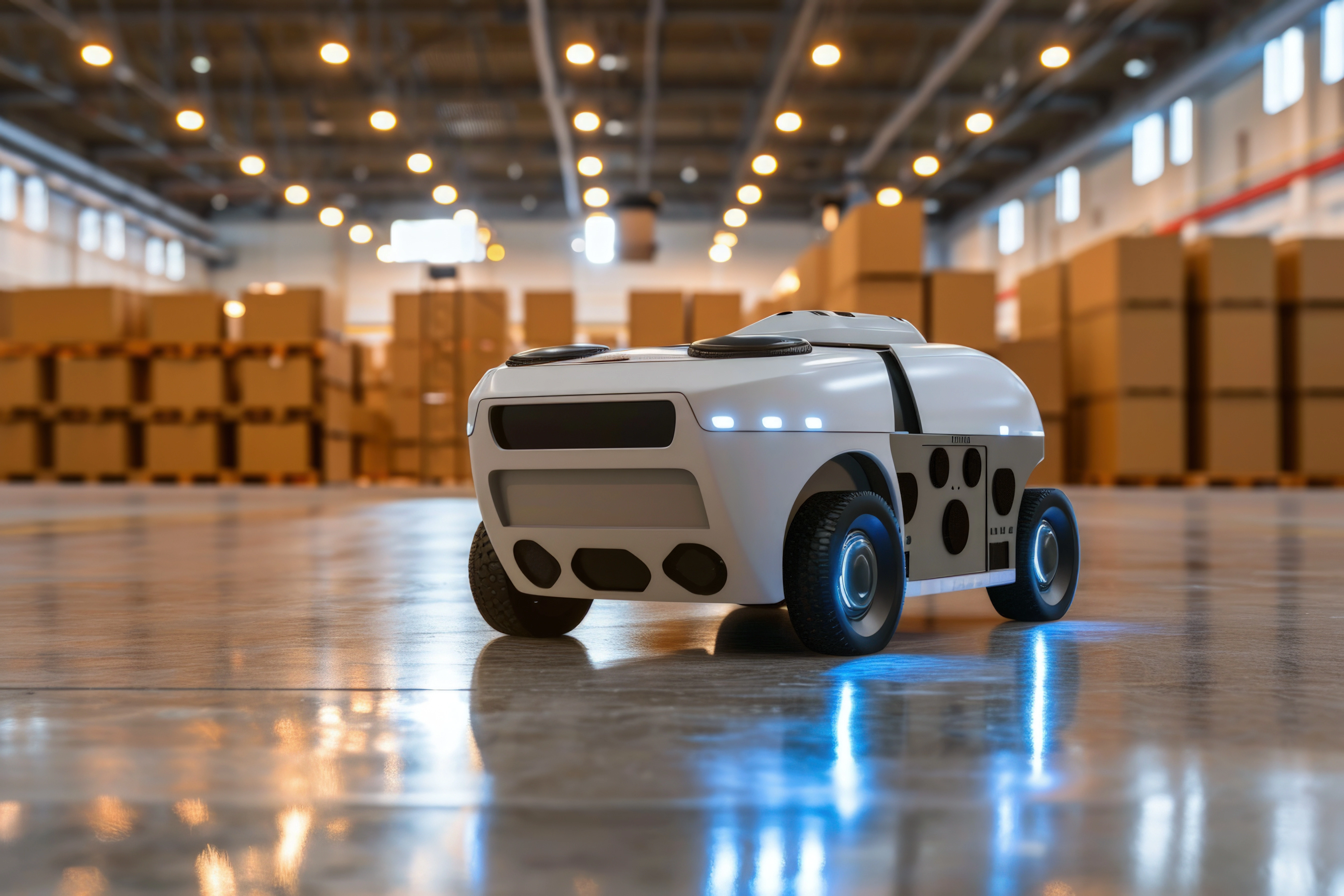
This is where Autonomous Mobile Robots (AMRs) are reshaping the game. Designed to navigate and transport materials intelligently, AMRs are becoming the backbone of smart factories, helping manufacturers achieve higher productivity, safety, and traceability — all while reducing costs.
What Are Autonomous Mobile Robots (AMRs)?
Unlike traditional Automated Guided Vehicles (AGVs) that follow fixed magnetic or optical paths, AMRs use advanced sensors, SLAM (Simultaneous Localization and Mapping) navigation, and onboard computing to make real-time decisions. This allows them to move freely, avoid obstacles, and optimize routes dynamically — just like a human operator, but faster and more reliable.
AMRs can be equipped with different top modules such as:
- Lifting modules for trays, racks, or pallets
- Conveyor tops for smooth handover between machines
- Forklift systems for vertical stacking or shelving
- Tugger modules for towing multiple trolleys
This versatility enables AMRs to automate nearly any material movement across production floors, warehouses, or cleanrooms.
Why AMRs Are Transforming Indonesian Manufacturing
Indonesia's industrial landscape — from automotive and electronics to FMCG and logistics — is facing challenges like labor shortages, production variability, and rising safety standards. Manufacturers are now looking for solutions that combine flexibility with intelligence.
Here’s why AMRs are becoming the preferred automation solution:
1. Increased Productivity
AMRs work 24/7 without fatigue, ensuring smooth material flow even in complex or multi-shift environments.
2. Enhanced Safety
Built with 360° LiDAR sensors and obstacle detection, AMRs minimize collision risk, especially when handling heavy or high-value parts.
3. Improved Traceability and Data Insight
Every movement is tracked digitally, providing real-time visibility into logistics performance and enabling predictive decision-making.
4. Easy Integration
AMRs can integrate seamlessly with existing systems like MES, PLCs, and WMS, allowing a gradual and low-risk transition to automation.
How Indobot Helps Manufacturers Adopt AMRs
As a system integrator specializing in robotics and smart factory solutions, Indobot bridges the gap between technology and real-world application. Our approach begins with understanding each client’s production layout, workflow, and efficiency goals. From there, we design and deploy AMR systems tailored to the factory’s unique needs.
Indobot’s expertise includes:
- Layout and workflow analysis
- AMR fleet selection and customization
- Integration with MES/PLC/WMS systems
- On-site deployment, training, and maintenance
- Long-term system monitoring and optimization
Whether it’s automating part transfers in an automotive plant, connecting cleanroom zones in biopharma, or improving material flow in warehouses, Indobot ensures every AMR project delivers measurable value.
The Future of Smart Factories in Indonesia
The rise of Autonomous Mobile Robots (AMRs) marks a pivotal shift in Indonesia’s manufacturing evolution. Companies that embrace automation early will not only achieve better operational efficiency but also strengthen competitiveness in the global market.
With the support of trusted system integrators like Indobot, manufacturers can confidently transition toward fully connected, intelligent, and sustainable factory operations — where robots and humans work together to drive productivity and innovation.